Thoughts on focusing
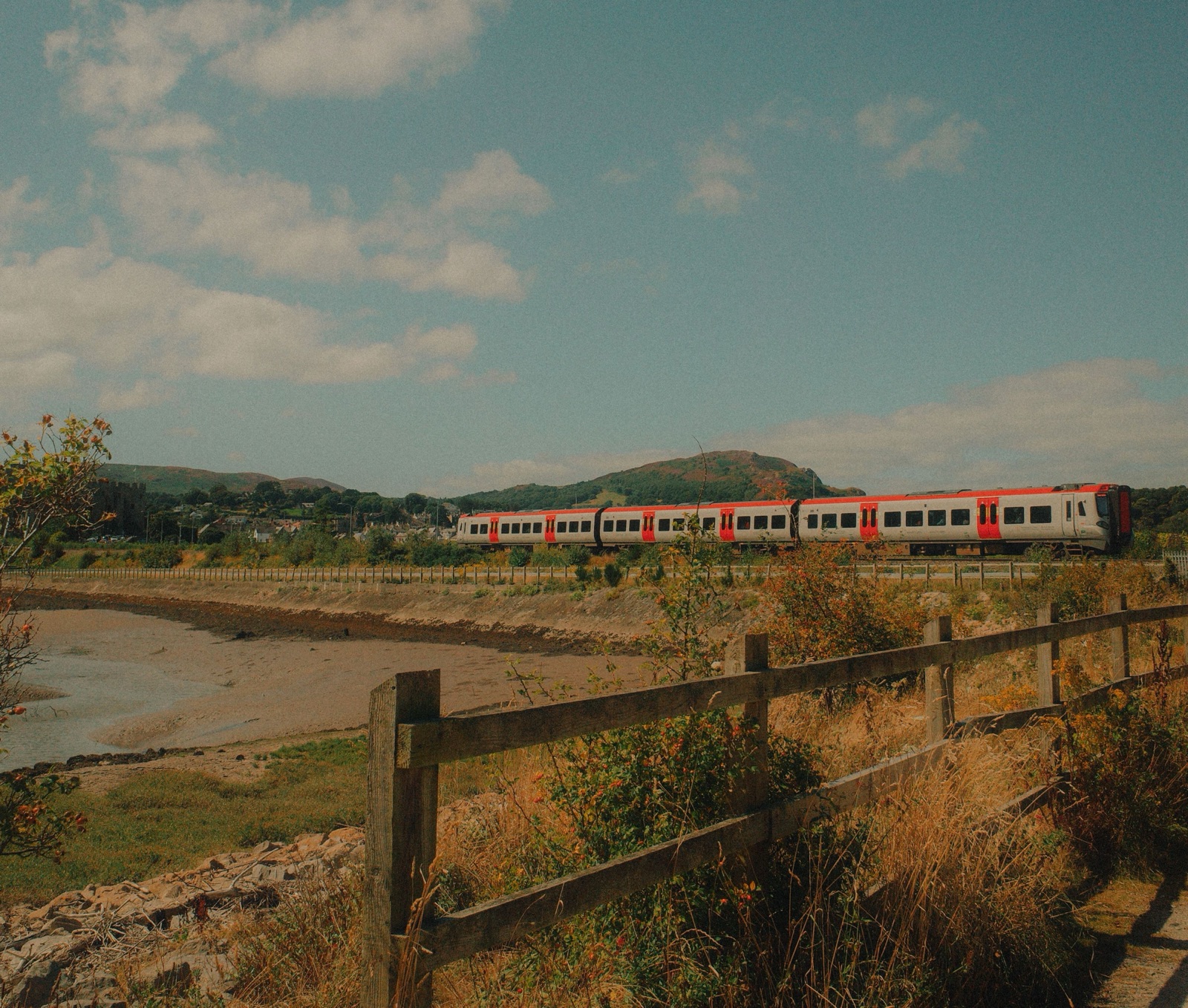
I spend a lot of time on trains. Usually travelling to and from our constituency, or visiting my parents. Unfortunately these trains aren’t always the best suited to working. The table has a slight stickiness and weird stain, the wifi could be better, someone nearby is having a loud argument with a colleague about how “IT’S NOT IN THE TRACKER!!” (still don’t know what it is or what he’s tracking). Despite this I write and think more creatively than I usually manage in the office or at home. I work better on trains and in cafes than I do at my own desk, and I’ve spent lots of time wondering what the exact reason for this is so I’ve decided to look for an answer.
The most common claim I see in research is ambient noise. Mehta, Zhu and Cheema’s 2012 paper found that 70 dB of background chatter, roughly the sound of a busy cafe, boosted creative-cognition tasks compared to either silence or louder noise. Coffitivity’s business model is based on this. However, Blunnie’s 2014 replication found nothing, and Robison and Unsworth’s 2015 study, which played café audio to 241 readers, found silence and café noise produced identical rates of mind-wandering. Apparently silence doesn’t quiet your mind, but nor does ambient noise. The 70-dB story seems far less compelling than its popularity suggests.
Deepening our search, the picture becomes cloudier. Some of what’s happening really is rooted in a cognitive gain. Ambient motion, the mild stimulation of strangers presence, the alternation between watching the window and looking back at the screen; all things that literature broadly supports as good for thinking. Having thought a lot about this there’s a duller and probably larger thing happening though; I’m more likely to start, and less likely to ruin the session by pushing through without breaks. Mark, Iqbal and Czerwinski (2017) found that blocking digital distractions raised focus and self-reported productivity but also raised stress, especially in more impulsive workers. Cutting distractions out doesn’t make work easier but makes it more relentless. On a train, the micro-breaks are ‘baked in’ as my colleague Manon would say.
My usual workplaces fail in this in different way. My home study is dense with tasks, reorganising furniture, the laundry, each paired in memory with every previous time I sat there and didn’t manage to start. Wendy Wood’s habit research suggests physical context does most of the work in shaping behaviour; a knowledge worker’s home is probably the densest cue environment they’ll encounter for not doing the task in front of them. Smeekens and Kane (2016) found, contrary to a lot of blog posts I’ve read, that mind-wandering doesn’t actually help creative thinking, so the home daydream isn’t paying off really. Suckley and Nicholson, surveying workplace design, argue creative work depends on alternation between concentration and collaboration; at home there’s no alternation on this. The office adds it back, at the cost of constant evaluation.
The most interesting paper I came across is one I would never have thought to look for. Hautala and Jauhiainen (2019) studied peripheral artists and scientists and found that the most productive weren’t the ones who stayed put or who relocated permanently, but the ones who moved between centres. A tranquil periphery, they argue, allows for focused work and rebellious approaches. A train carriage offers this to me: somewhere you are not from, where no one knows what you are supposed to be doing. You can’t tidy, can’t rearrange, can’t be tempted to Portcullis House for a coffee. The space is structurally untidiable, which releases you from custodial cognition, the drag of being responsible for a room. You also can’t stay; the boundedness of a café isn’t a deadline but the soft pressure of a space you’ll eventually have to leave, which is curiously effective at concentrating attention. Oppezzo and Schwartz (2014) showed walking improves divergent thinking by around sixty per cent, and potentially passive motion does some version of the same; the novel thoughts I have are disproportionately from trains and walks with friends and colleagues (Although I somewhat think a walk is more effective).
So what does this mean? I really hoped to answer this for myself for good, and got Perplexity to find me 15 papers to read. However I’ve mainly discovered that the right answer is different for everyone, and that whatever it is for you, it probably isn’t a productivity hack. The variables that drive how you work are stranger and more idiosyncratic than the ones most advice optimises for.
I don’t think everyone should work on trains, but I think everyone should put a lot more effort into paying attention to what works for them, because there’s a chance it’s something unassuming.