Saturn Devouring His Son
Around 1820, in a farmhouse outside of Madrid, Francisco Goya painted a large figure eating a corpse directly onto the wall of his own home. The figure crouches in darkness, hair wild, eyes enormous, gripping a headless human body in both fists with one arm already bitten off at the shoulder. Posthumously titled Saturn Devouring His Son, one of the most disturbing paintings in the Western canon — presumably why so much writing reaches the same disturbed conclusion.
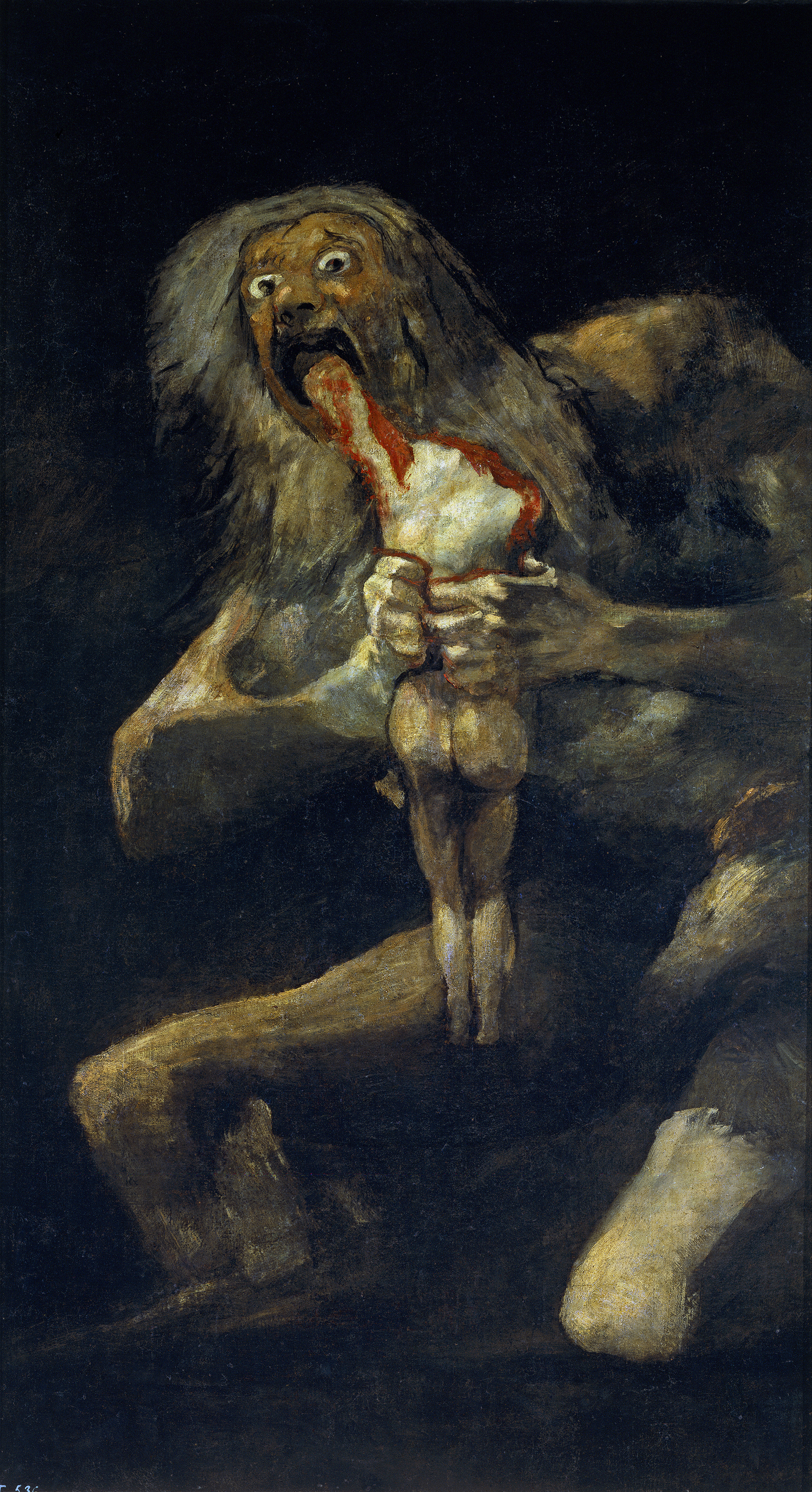
Goya was in his seventies. He had been deaf since an illness in 1793 and had nearly died of another in 1819, an experience he recorded in a self-portrait showing him slumped in the arms of his doctor. He bought the Quinta del Sordo, the House of the Deaf Man, that same year, withdrew from life, and covered its walls with the fourteen works we now call the Black Paintings. He never showed them to anyone. So the Saturn is just for him, a confession. A dying man, facing his own mortality and the loss of his own children. The painting represents the inside of Goya’s mind.
It’s a compelling read, and it might even be true. The problem for me is how little of this narrative Goya contributes to. He never titled the painting; the names we use were most likely attached in 1828, after his death, when his friend Antonio Brugada inventoried the house. The Goya scholar Fred Licht has warned that the traditional title may well be misleading, and others have gone further, pointing out that the half-eaten body has the rounded hips of an adult and quite possibly an adult woman, which doesn’t sit neatly with a myth about swallowing newborn sons.
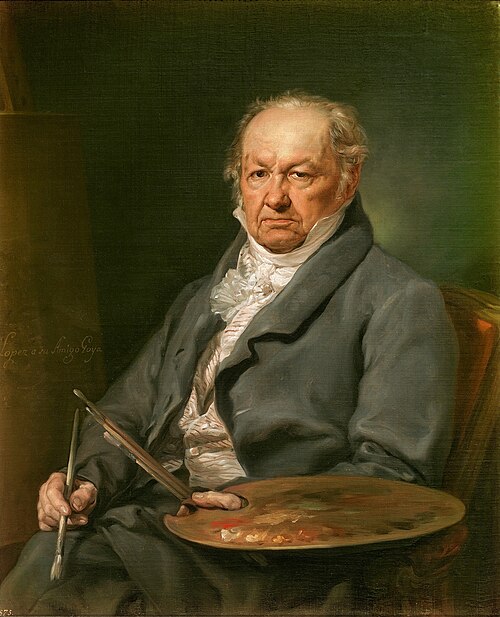
The paintings themselves were hacked off the walls in the 1870s and transferred to canvas in a restoration so aggressive that we cannot be fully confident about what Goya’s hand did and didn’t do; the restorer is even thought to have painted out an erection. One of the most confidently psychoanalysed pictures in art history has its analysis based on a label its painter never wrote, applied to a surface he didn’t paint it on, depicting a figure we cannot definitively identify.
It’s worth asking why the biographical reading became the default, because the answer is itself interesting. The nineteenth century invented the cult of the suffering artist more or less as Goya’s paintings were coming off the walls, and a deaf recluse painting nightmares in a farmhouse is an excellent fit for it. Reading the Saturn as autobiography flatters our Romantic inheritance. It also conveniently requires no knowledge of Spanish politics, which may explain its endurance in the English-speaking essay tradition better than anything else.
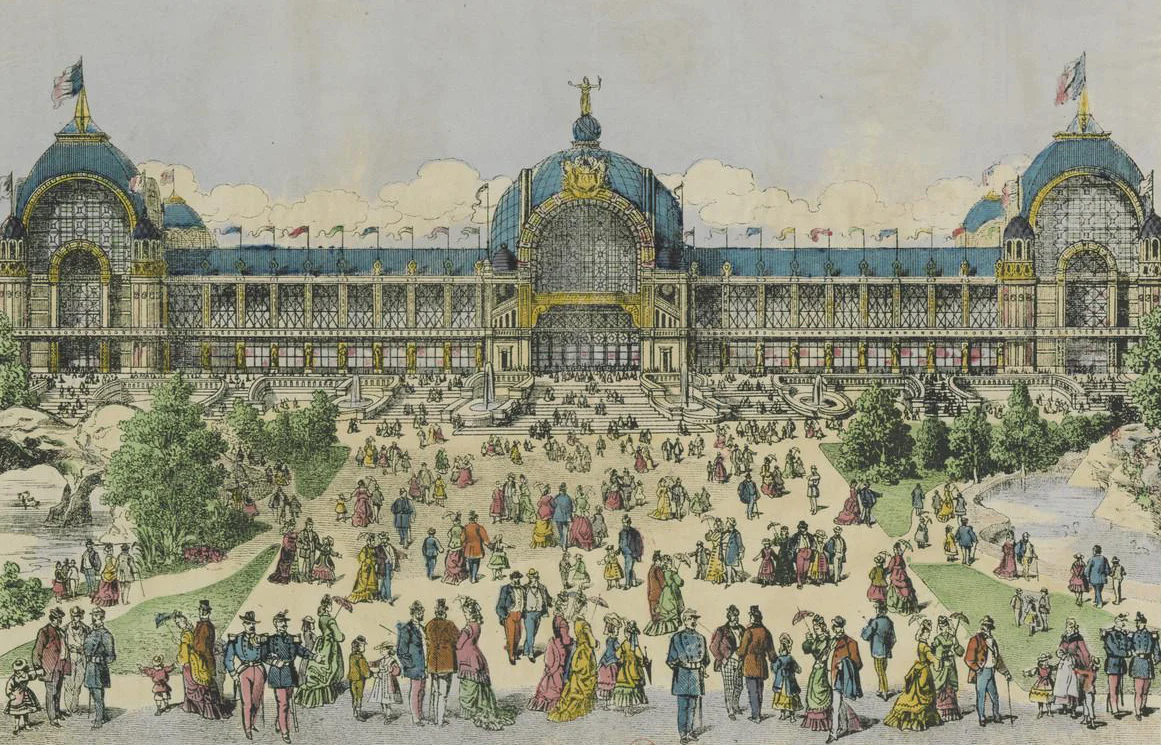
The Black Paintings reached the public in 1878, at the Paris Exposition Universelle, packaged from the start as the testament of a tormented genius, and we have mostly kept that framing.
At this point most writing on the Saturn mentions, usually in passing, that Rubens painted the same subject two centuries earlier, notes that Rubens’s version is calmer, and then returns to the Goya. The Rubens is treated as a little notion, a short art history fun fact. I think this is not quite right. The comparison deserves to be explored in a whole argument, because between the two paintings lies one of the periods in which Europe’s ideas around power most shifted.
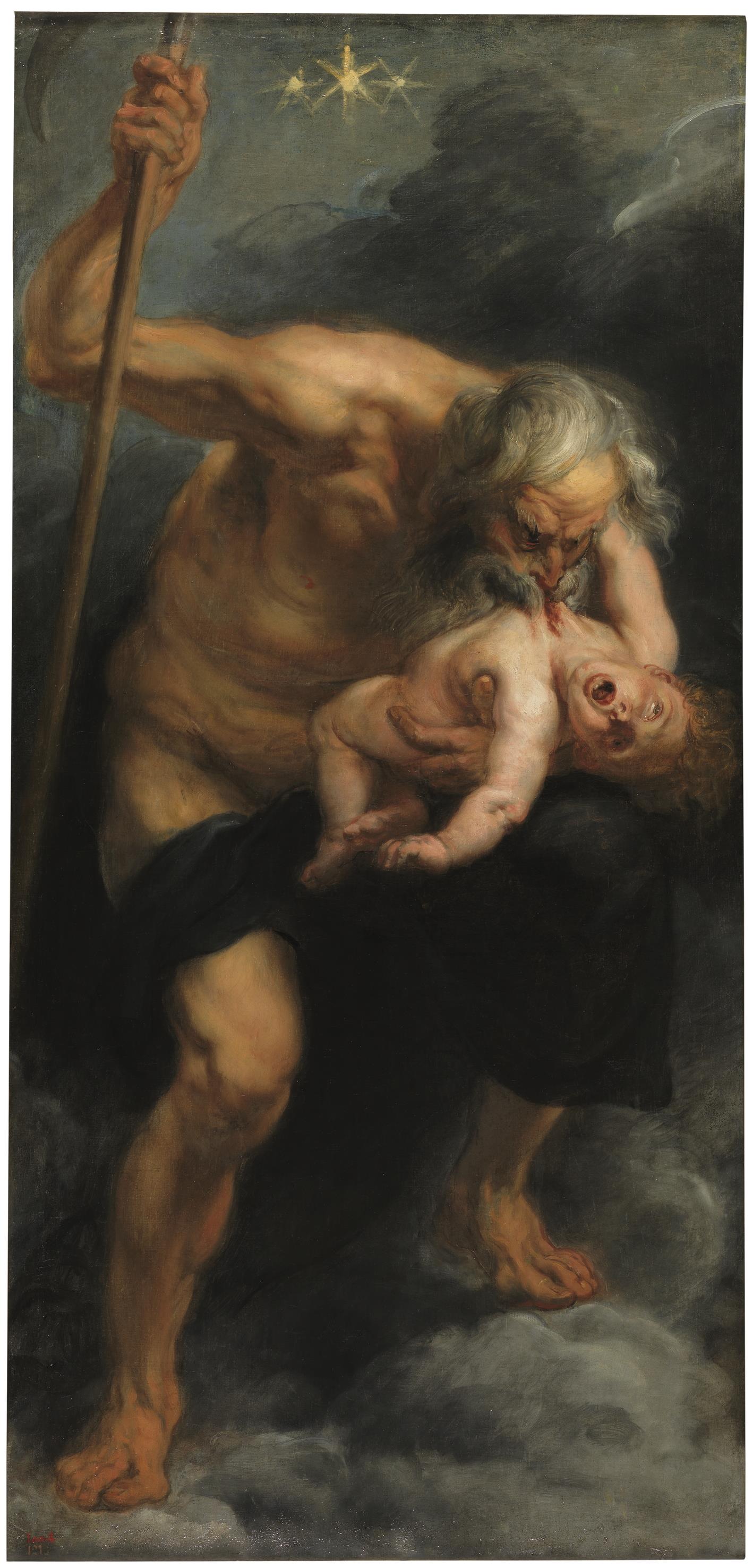
Rubens’s Saturn was painted around 1636, when Philip IV of Spain commissioned more than sixty mythological pictures for the Torre de la Parada, his hunting lodge in the hills outside Madrid. Rubens, then the most celebrated painter alive, supplied designs for the whole cycle, drawn largely from Ovid, and painted the Saturn himself. His god is upright and muscular, caught mid-stride, leaning on his scythe. He bites into the chest of a living, screaming infant, and the gore is palpable. But looking around the action we see above Saturn’s head that Rubens painted three stars, a nod to Galileo’s recent observations of the planet, whose rings his telescope had resolved only into two attendant points of light. The god of myth shares his canvas with the latest astronomy. The cosmos is ordered and intelligible, and Saturn’s crime belongs within that. He has received a prophecy that a child of his will overthrow him, and he is acting on it. The act is monstrous and reasoned at the same time. There is a threat, a calculation, and a follow through.
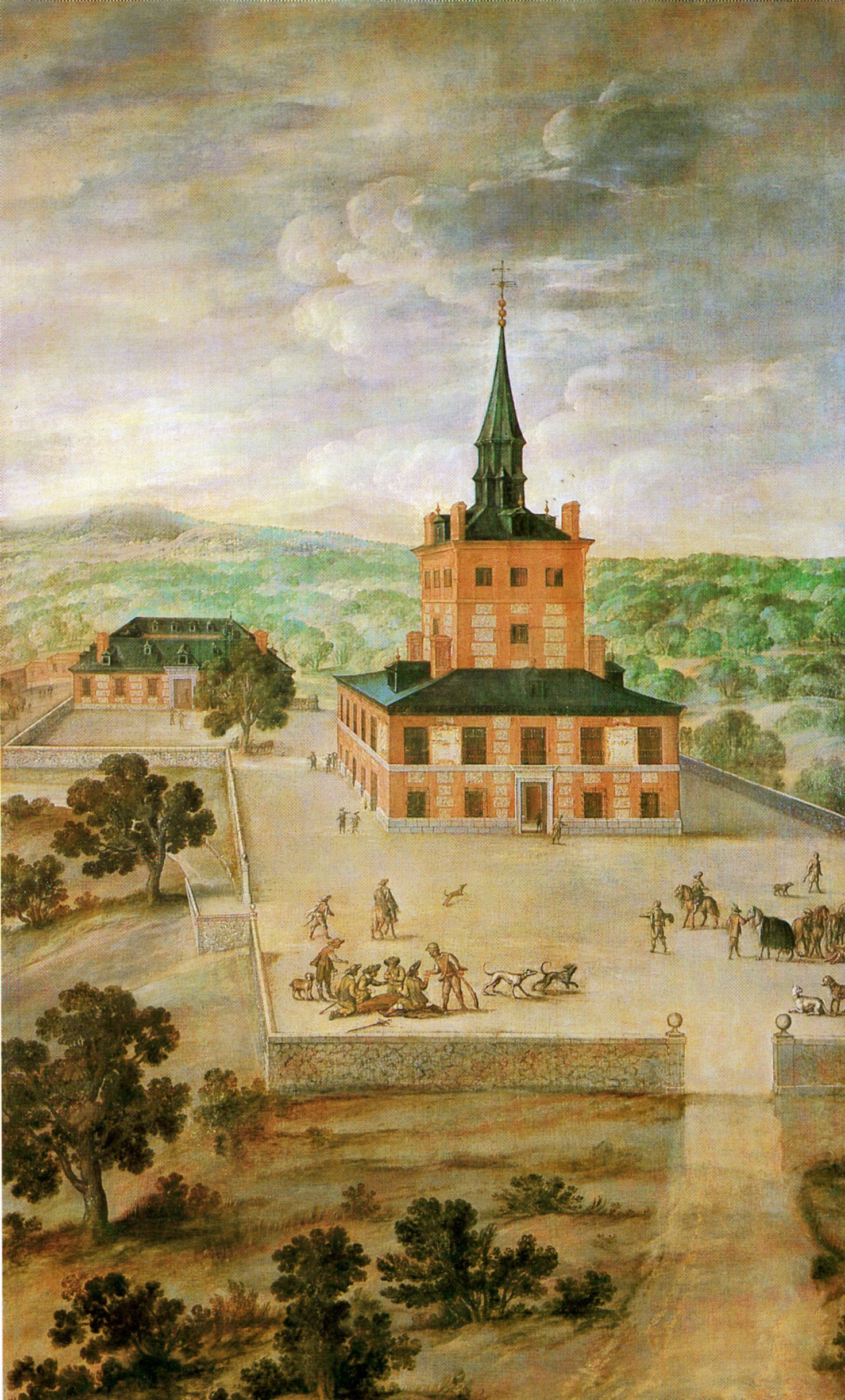
To consider a work without its context is rather pointless, so let’s explore. Philip IV was an absolute monarch of the Habsburg line, a dynasty whose entire existence was organised around the anxieties of succession, and he hung a picture of a sovereign god consuming his own heir in a lodge where he went to relax. That tells you something about the seventeenth century and the legible dynastic ruthlessness of the time. A king could look at Saturn and see a dark mirror of his own predicament, the terrible arithmetic of holding a throne, and find the image decorative rather than indicting. Rubens paints power the way the age of divine right understood it: cruel, certainly, but deliberate, lawful in its own cosmology, embedded in an ordered universe.
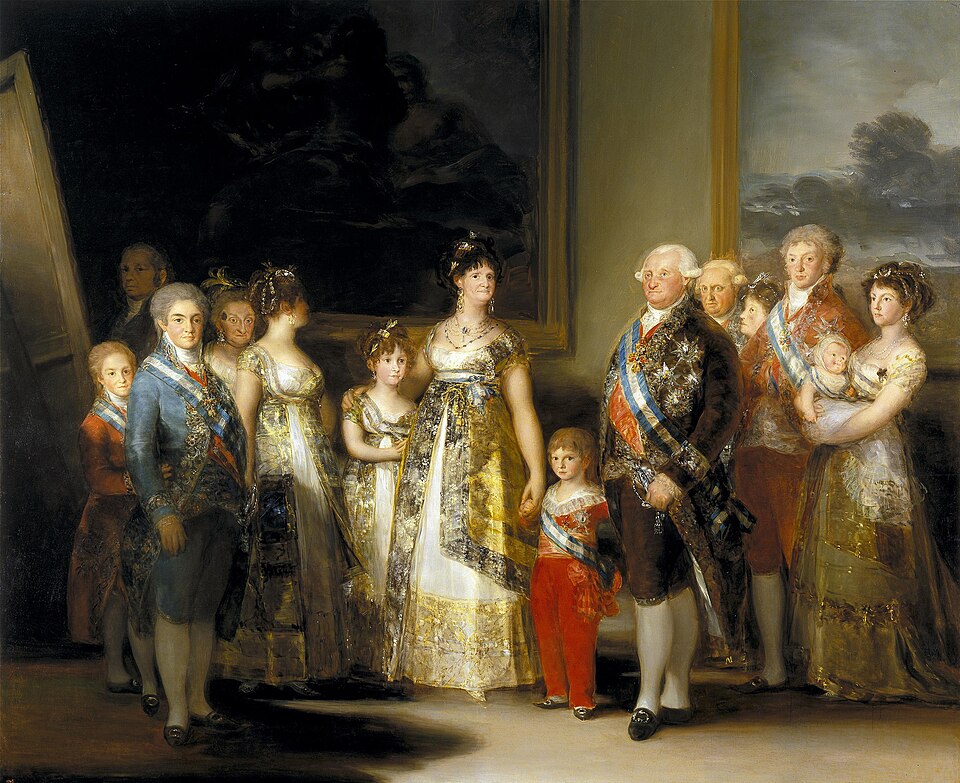
There are limits to comparing these two paintings, and this is partly why I wanted to write this. One was a public commission for a king’s retreat; the other was private work on a private wall, never meant for anyone. Any difference between them might just be the difference between decoration and diary. Two data points, painted 190 years apart for entirely different purposes, cannot by themselves establish that anything in the wider culture shifted. If the argument stopped here it wouldn’t be very valuable.
Thankfully, the argument doesn’t rest on the paintings. It rests on what happened to the myth of Saturn in between, and that we can date with unusual precision. In March 1793, with the French Revolution beginning to consume its own leadership, the Girondin deputy Pierre Vergniaud stood before the National Convention and warned that the Revolution, like Saturn, would devour its children one after another and leave only despotism behind. Seven months later the Revolution proved him right personally, and he went to the guillotine with the rest of his faction. The royalist journalist Mallet du Pan coined almost the same phrase in an essay the same year, and between them they gave Europe one of its most durable political proverbs. By 1800 the line was everywhere. Saturn had stopped being a god of myth. He had become shorthand — the standard image for power that destroys its own creations in order to go on existing, for revolutions that eat their architects, for regimes that purge their loyalists.
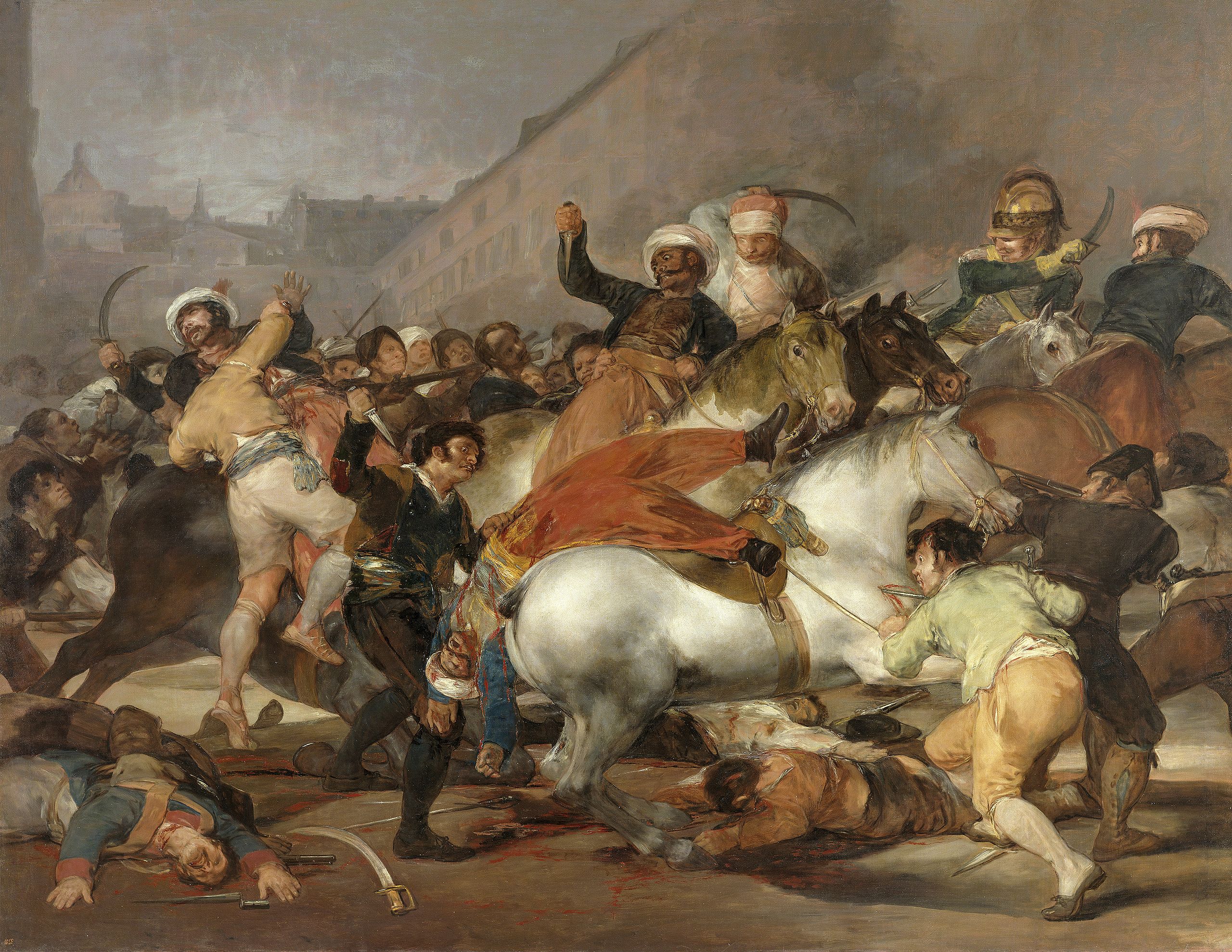
Goya’s life ran straight through the consequences. He watched the French armies arrive in 1808 carrying the Revolution’s inheritance, recorded what followed in the Disasters of War etchings, and then watched Ferdinand VII return and persecute the very liberals who had resisted the invasion in his name. And the dating of the Black Paintings is more pointed than the mortality reading allows, because 1820 to 1823, the very years Goya was working on those walls, were the years of Spain’s liberal experiment, the Trienio Liberal, which began with a military revolt forcing a constitution on the king and ended with a French army marching back into Spain to restore absolute rule. The purges resumed. Goya, whose sympathies and friendships were liberal, left for Bordeaux within the year and died there. Whatever else the walls of the Quinta record, they record those three years, painted by a man watching his country swallow itself for the second time in a decade.
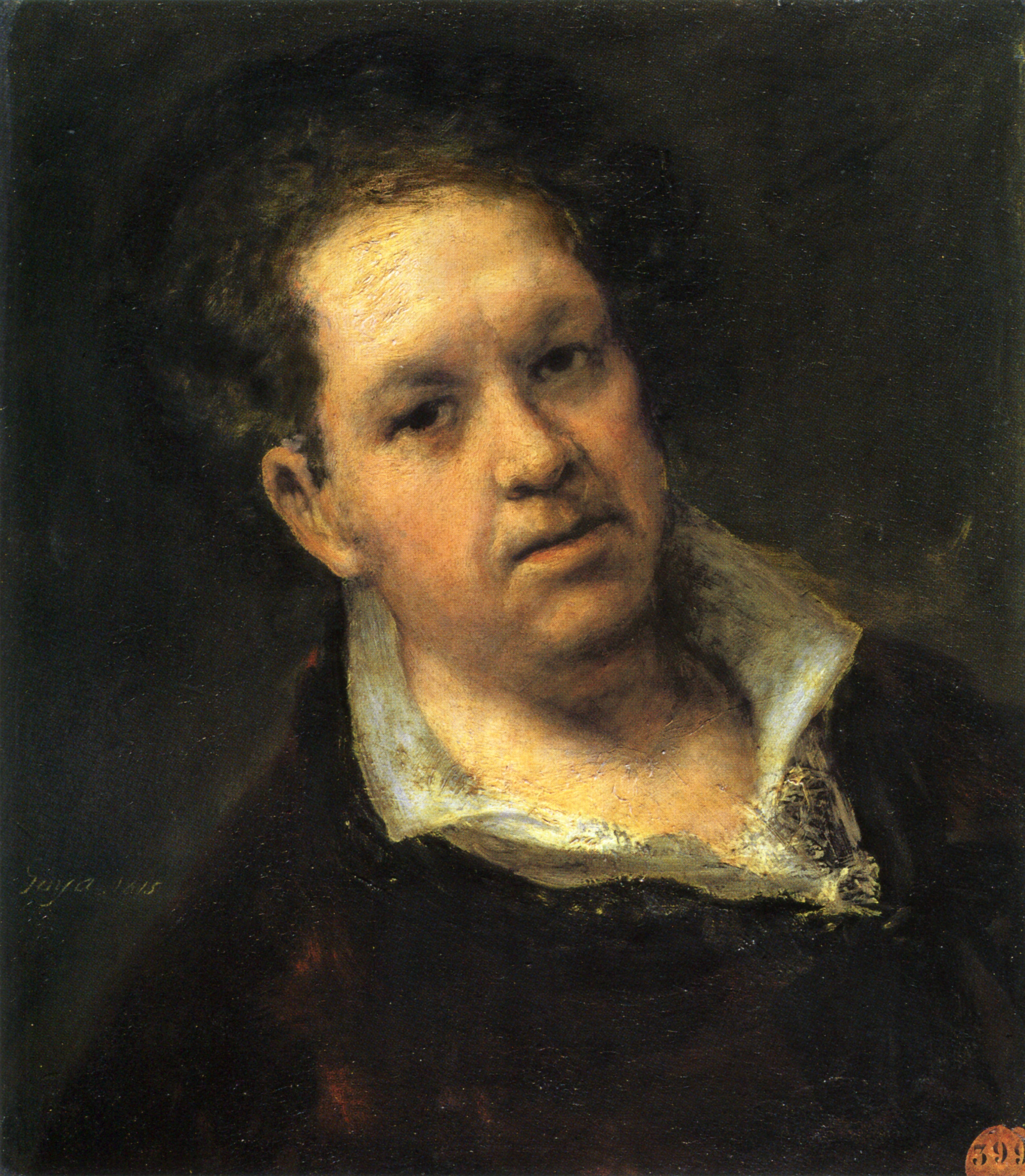
And Goya knew the Rubens. Goya spent his career as a painter to the Spanish court; the Rubens Saturn hung in the royal collection he knew intimately, and he had already made a chalk drawing of the subject back in 1796. His Saturn is plausibly a deliberate revision of a specific painting he had studied for decades. Knowing how well he must have known the painting, every omission and difference between the two becomes symbolic. The scythe is gone. The stars are gone, and with them the ordered cosmos. The prophecy is gone, because nothing about this figure suggests a plan; the eyes are not cruel but terrified, the eyes of something that cannot stop. The infant is gone too, replaced by that grown, headless body. Rubens gave his god a calculated reason. Goya took every reason away and left only the appetite for destruction.
The adult corpse is worth noting, because when taken as a painting of the old myth it is an error. Goya knew Saturn swallowed his children at birth; that was the whole mechanism of the story. But under the political proverb it is exact. Revolutions do not devour infants. They devour ministers, deputies, generals, the grown collaborators of yesterday. Vergniaud was forty when the metaphor came for him. If Goya’s painting illustrates anything, it illustrates the sentence spoken in the Convention in 1793 far more faithfully than it illustrates anything in Hesiod, and the detail that is often treated as an iconographic puzzle becomes a precise notation of the picture.
Can we prove this is what Goya meant? No, and the honest answer is that nobody can prove the deathbed reading either, for the same reasons: no title, no testimony, a restored surface. But notice that the uncertainty does not cut both ways equally. The biographical reading needs access to Goya’s mind, which the historical record absolutely refuses us. The political reading only needs access to his world, which we have in abundance. We know what the image of Saturn meant in European political language by 1820 because the sources tell us directly, and we know the men who named the painting in 1828 lived inside that language too. Whatever was happening in Goya’s head, the century that received the painting, titled it and eventually hung it in the Prado did so in a Europe where Saturn devouring his children was a sentence about politics before it was a sentence about gods.
Herein lies the claim. These two paintings are bookends around the transformation of the idea of sovereignty. Rubens shows us power as the old order understood it, terrible but purposeful, a god with a prophecy and a plan, at home beneath Galileo’s stars in a universe where cruelty had its logic. Goya shows us power as Europe had learned to see it after 1793: blind, devouring, stripped of cosmology, eating its own grown children in the dark with no real idea why. Between them sits the Revolution, which taught the continent that the machinery of power could run without anyone steering it, and minted the metaphor that Goya, knowingly or not, painted better than anyone before or since.
By most accounts the Saturn hung in Goya’s dining room, and writers love that detail because it makes the old man stranger, eating his supper beneath the thing. To put it differently: the biographical reading keeps the horror safely contained inside one dying painter’s head, where it asks nothing of us. Let the painting point outwards instead and it becomes a report on the world its first viewers actually lived in, delivered by a man who had served kings, survived two regimes’ worth of purges and watched the proverb come true twice. That symbol seems worth having in your dining room.